

“When a measure becomes a target, it ceases to be a good measure”
— Charles Goodhart (1975)
Economics has long relied on indicators to simplify a complex world. Inflation, GDP, unemployment – each distils countless decisions into a single figure. Yet when policymakers start managing to the number rather than the reality it represents, meaning slips away.
Goodhart’s Law reminds us that once a measure is used for control, the incentives around it shift, and the measure itself loses meaning. In an era driven by algorithms and performance metrics, this lesson feels more urgent than ever.
Origins in Monetary Policy
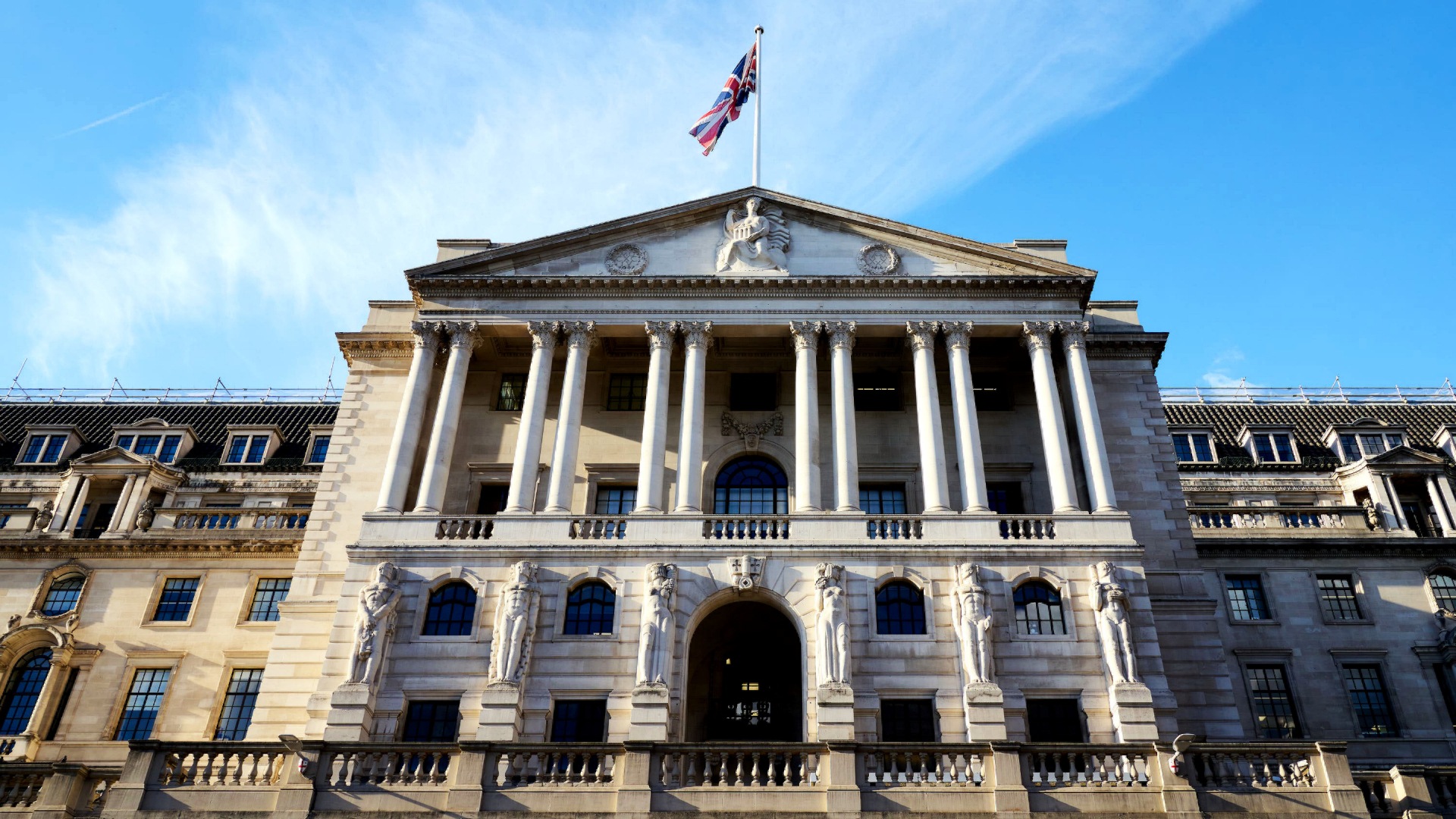
Goodhart’s Law was first surfaced the 1970s, a time when policymakers were discovering the limits of mechanical control. British monetary authorities tried targeting money supply growth to tame inflation but banks and firms responded by creating new forms of credit and shifting transactions off balance sheets, leaving the official targets looking stable while real monetary conditions moved elsewhere. The signal had detached from the system it was meant to track.
A similar pattern reappeared decades later. Inflation targeting anchored expectations through much of the 1990s, but its very success encouraged central banks to focus too narrowly on price stability. Asset prices and leverage built quietly in the background. By the time imbalances surfaced, policy looked steady while fragility had grown. In trying to control the metric, policymakers lost sight of the mechanism it represented.
The same logic applies outside macroeconomics too. Schools that chase exam statistics often narrow teaching to predictable questions; hospitals judged by waiting times may favour routine procedures over urgent or complex cases. The metric, once a tool for accountability, becomes a constraint on judgment.
Markets and the VIX
Financial markets provide a vivid example of Goodhart’s Law in motion. The VIX, known as the “fear gauge,” was once a useful indicator of investor sentiment. But when derivatives emerged allowing traders to bet directly on volatility, the index shifted from being a measure to being a market itself.

As more funds sold volatility to earn steady returns, the measure they relied on began influencing the behaviour it was meant to observe. Calm markets bred complacency, compressing volatility even further until the 2018 “volmageddon” crash abruptly reversed the cycle. The measure had stopped reflecting fear and started manufacturing it.
The underlying problem wasn’t irrationality but endogeneity, the feedback between observation and behaviour. In economics, endogeneity describes when cause and effect intertwine. In such systems, measurement becomes an intervention. Once traders, firms, or algorithms act on a metric, the information it conveys starts to change.
Algorithms and Endogeneity
Goodhart’s insight has gained a new relevance in the algorithmic economy. Machine learning models thrive on optimisation: clicks, views, conversions. But once platforms begin rewarding content that maximises those numbers, creators adapt their behaviour accordingly. The data no longer reflects what people enjoy; it reflects what the system has learned to promote. That is endogeneity in action: the measure starts shaping the behaviour it’s meant to measure.
Economists have a term for a deeper version of this process: performativity. When a prediction or metric doesn’t just respond to reality but begins to construct it. A recommendation algorithm predicting what users will like ends up steering what they do like, reinforcing its own forecast. Over time, the metric stops describing preference and starts producing it. Attention becomes a manufactured output rather than a spontaneous signal of choice.
In this sense, algorithms act as accelerators for Goodhart’s Law, compressing feedback loops from years to milliseconds. For economists, that raises a familiar question in a new form: when the data you observe changes the world you model, how do you keep the model useful?
Avoiding the Metric Trap
If measurement changes behaviour, how do we measure responsibly? Economists and data scientists alike are exploring ways to soften the sharp edges of Goodhart’s Law.
One approach is triangulation – using multiple imperfect indicators rather than one dominant target. Central banks now weigh inflation alongside employment and output gaps; firms blend quantitative KPIs with qualitative assessments to catch what numbers miss.

Another safeguard is adaptive auditing: examining not just results but the incentives a metric creates. The UK’s Office for National Statistics, for example, regularly revises GDP methodology to reflect changing production patterns. In data-science contexts, algorithmic audits perform a similar role: testing whether optimisation aligns with purpose.
The deeper lesson is that metrics are not mirrors. They are instruments that respond to pressure. Treating them as objective truths ensures they stop being either.
Conclusion
The point is not to abandon metrics, but to recognise their boundary. Indicators are useful precisely until they become objectives. Once they do, they tell us less about performance and more about how well the system has learned to play the game.
For economists, that insight cuts across fields; from monetary policy to machine learning. The challenge is to measure without distorting, to learn without looping back into illusion. The reflexivity between observation and action is now part of the economy itself; understanding it is the first step toward designing better rules for it.
In that sense, Goodhart’s warning from half a century ago remains not just relevant but essential: whenever precision becomes performance, clarity turns to illusion.
References
Goodhart, C. A. E. (1975). Problems of Monetary Management: The U.K. Experience. Papers in Monetary Economics, Reserve Bank of Australia.
Muller, J. Z. (2018). The Tyranny of Metrics. Princeton University Press.
Bank of England (2019). Inflation Targeting: 20 Years On. Discussion Paper.
Maciejovsky, B., & Budescu, D. V. (2019). Markets as information aggregation devices: The role of incentives and feedback. Journal of Economic Behavior & Organization, 162, 32–46.
 The Young Economist Initiative
Leave a comment