The views expressed in this article are solely my own and do not represent the official position of YEI, a nonpartisan think tank that provides a platform for its researchers to share independent perspectives.
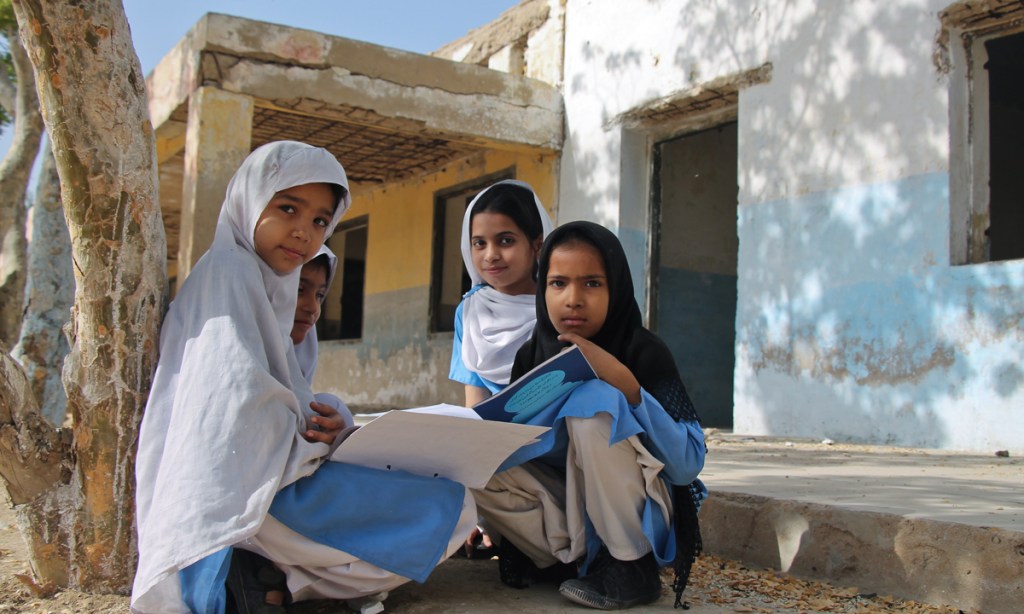
In Pakistan, being born a girl often means being born with fewer choices. Not because she lacks the ability to dream, think, or achieve, but because her worth is measured against cultural expectations, misplaced honour, and centuries-old patriarchal mindset. While the Constitution promises equal rights and Islam emphasises the value of knowledge for all, the ground reality tells another story: millions of girls are denied their fundamental right to education, not by law, but by mindset.
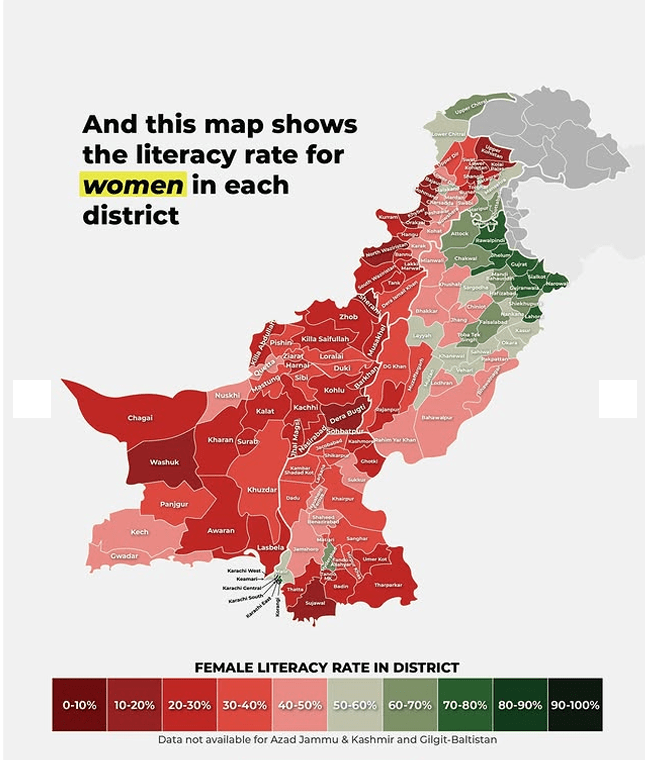
Gender discrimination remains one of Pakistan’s most pervasive human rights challenges, with far-reaching implications for both individual well-being and national development (Iqbal et al., 2012; Ejaz & Ara, 2011). According to the Pakistan Education Statistics 2016–2017, 5 million children are out of school, 60 percent of whom are girls. Nearly half of all women in the country lack access to basic education (Bukhari et al., 2019). Mainly confined to domestic spaces and excluded from decision-making, women face structural and ideological barriers that restrict their agency. These barriers are reinforced by patriarchal norms that sustain male dominance in both private and public spheres (Ferrant & Kolev, 2016).
Despite education being universally recognised as a fundamental right, girls in Pakistan are often deprived of it due to a complex interplay of cultural practices, religious misinterpretations, economic constraints, and weak institutional capacity. This exclusion has significant macroeconomic costs. Limited access to education reduces female labour force participation, depresses national productivity, and undermines long-term economic growth. The absence of educated women from the formal economy results in a substantial underutilisation of human capital, a loss that perpetuates intergenerational poverty and slows overall development.
From an economic perspective, gender discrimination functions as an institutional constraint that distorts resource allocation and suppresses overall productivity. Excluding girls from education reduces both equity and efficiency, leading to long-term imbalances in human capital formation and labour market outcomes. As outlined in Article 14 of the European Convention on Human Rights, discrimination based on gender is not only a violation of fundamental rights but also a systemic waste of untapped potential.
Cultural Norms, Gender Roles, and Safety Concerns
The education system in Pakistan has long struggled with systemic issues, whether in public schools or private institutions. Structural cracks persist beneath the surface and are often hidden from public scrutiny or media exposure. Despite education being a fundamental human right, Pakistan’s socio-cultural framework disproportionately allocates this privilege to men. In many rural areas, parents are reluctant to send their daughters to school, influenced by entrenched stereotypes that suggest women do not require formal education, as their primary role is perceived to be homemaking and childcare. This reluctance, however, extends beyond outdated gender roles. It also stems from legitimate concerns for the safety of female students. Schools, which are expected to be secure and inclusive spaces, have frequently been sites of harassment, sexual assault, and even fatal violence. These realities contribute to a widespread fear among families, discouraging them from allowing their daughters to pursue education outside the home. Moreover, textbook representations also reinforce the regressive ideals. Women are frequently depicted in domestic roles, while men are shown as breadwinners engaged in intellectual or skilled labour. This gendered portrayal perpetuates harmful societal beliefs, including the notion that higher education reduces a woman’s desirability as a future spouse. A woman seeking independence or asserting her rights is often seen as deviant or disrespectful within traditional family structures. The effects of these norms are evident in national statistics. The net enrollment rate for girls in primary education was 74% compared to 86% for boys in 2017. According to Pakistan Education Statistics 2016–17, the gross enrollment rate (GER) for girls was 72%, significantly lower than the 85% recorded for boys. This persistent gap reflects more than just parental attitudes; it reveals systemic failures in ensuring access, safety, and equitable opportunity for female students.
Safety, Honour, and the Politics of Fear
This imminent threat to the student’s life and person raises alarm in connection with the parent’s honour, without which the Pakistani people consider themselves insignificant and inferior. According to a report by the Human Rights Commission of Pakistan, sexual violence against females in Pakistan has considerably increased over the past few years (Askari et al., 2022). Recent empirical evidence that has come to light in this regard was news that reported a case from the Government College University for Women in Faisalabad (Suleman, S.,2020), where a first-semester student was raped and murdered by university teachers and faculty members. Post-mortem reports revealed multiple men were involved in the assault. Hence, such security concerns are a majorly prevalent issue in hindering women’s education across the country because perpetual grotesque news and a lack of action and successful conviction of the perpetrators, instead of desensitising the people, has made them more afraid.
Concerns regarding personal safety significantly restrict female access to education in Pakistan. This threat is not merely perceived; it is a lived and recurring reality. The fear of sexual violence is closely tied to cultural notions of honour, especially in rural and conservative areas where a family’s reputation is strongly linked to the perceived morality and safety of its female members. In such settings, any harm to a girl is viewed as a dishonourable event, one that casts lasting social stigma on the entire household.
According to the Human Rights Commission of Pakistan, incidents of sexual violence against women have increased in recent years (Askari et al., 2022). A notable case reported in Faisalabad involved the rape and murder of a first-semester student at Government College University for Women. The post-mortem report indicated that multiple university staff members were involved in the assault. The severity of such cases, combined with a lack of accountability and conviction, reinforces parental fears.
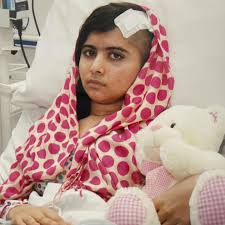
The danger that female students face is not theoretical; it’s a lived reality. One of the most internationally recognised examples of this is the case of Malala Yousafzai, a 15-year-old girl who was shot in the head by the Taliban in 2012 while returning home from school in Swat. Her only “crime” was advocating for girls’ right to education in a region where extremist ideologies had branded female education as immoral. Malala’s recovery and unwavering activism led her to become the youngest recipient of the Nobel Peace Prize.
Her memoir, I Am Malala, became a global symbol of resistance, courage, and the power of education. She famously declared in her UN speech, “One child, one teacher, one book, one pen can change the world.” Malala’s story highlights how dangerous it can be for girls to demand their right to study in Pakistan. While she became a voice for millions, the fear that led to her shooting still silences countless girls today who remain trapped by fear, patriarchy, and poverty (Yousafzai & Lamb, 2013).
“One child, one teacher, one book, one pen can change the world.”
Malala Yousafzai
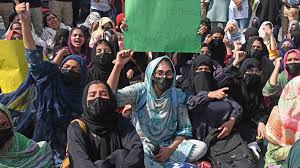
A recent and particularly alarming example of institutional failure and the culture of fear that limits girls’ education in Pakistan is the widely publicised Punjab Group of Colleges (PGC) rape case in 2024. The incident began when a first-year female student allegedly reported sexual assault by a campus security guard, prompting his arrest. In response, students across Lahore, led by the Progressive Students Collective (PSC), staged anti-harassment rallies to demand justice and greater accountability. However, the Punjab government later denied the allegations, stating the incident was “fabricated” and initiated legal action against those accused of spreading “misinformation.” This institutional dismissal, along with injuries sustained by protesters during clashes with police, only intensified public outrage and student unrest. Such responses send a powerful message to families already hesitant about sending their daughters to school: that even in the face of violence or abuse, justice may not be served, everything will eventually come on their daughters, and institutions will not protect them (Dawn, 2024).
Economic Constraints and the Burden of Opportunity Cost
Poverty remains one of the most persistent structural barriers to girls’ education in Pakistan. With inflation soaring and income inequality deepening, the cost of acquiring quality education has become increasingly prohibitive. For families already struggling to afford basic necessities, investing in schooling, particularly for daughters, becomes a luxury rather than a priority. Many low-income households face difficult trade-offs: sending a daughter to school often means forfeiting the immediate economic benefits of domestic labour or informal work, which is difficult to justify when immediate survival is at stake.
According to Askari et al. (2023), economic constraints account for nearly 35.3% of the reasons cited for female educational exclusion in Pakistan. The problem is further compounded by the fact that over 12.5 million people live below the poverty line, according to national estimates. In such households, especially in rural areas, daughters are expected to contribute to the family’s income rather than spend time in classrooms. The high opportunity cost of education discourages long-term investment in girls’ human capital, reinforcing intergenerational cycles of poverty and widening gender disparities in economic participation.
Religious Misinterpretations and Ideological Barriers
One of the more persistent barriers to girls’ education in Pakistan stems from misinterpretations of religious teachings. In many rural areas, influential clerics discourage female education by labelling co-educational systems as a source of “fitnah” or moral corruption. While these claims lack theological consensus, their societal impact is significant. The resulting fear and social pressure often lead families to withdraw girls from academic institutions or avoid enrolling them altogether. As Ahmad (2014) notes, this misapplication of religious doctrine leads to the suppression of female educational participation and reinforces patriarchal control under the guise of faith. This under-provision of education reflects a classical case of market failure, where misinformation, cultural norms, and ideological rigidity distort the demand for a merit good. In economic terms, education yields positive externalities that exceed private returns, justifying robust state intervention. However, the Pakistani state has consistently failed to provide the necessary institutional support to counteract these distortions.
Structural Gaps in Educational Infrastructure
The failure to treat education as a merit good is evident in Pakistan’s persistently weak education infrastructure. Many schools, particularly in rural districts, lack basic amenities such as boundary walls, electricity, clean drinking water, and functioning washrooms. According to recent data, 22% of primary schools lack electricity, and 38% lack access to drinking water (Askari et al., 2023). Under such conditions, expecting gender-segregated, safe environments for girls becomes increasingly unrealistic, deepening the rural-urban divide and further discouraging enrollment.
Legacy of Zia-ul-Haq’s Islamization Policies
To understand the ideological underpinnings of today’s restrictive gender norms in education, it is essential to examine the long-term impact of General Zia-ul-Haq’s Islamization policies during the 1980s. Zia-ul-Haq’s regime fundamentally transformed Pakistan’s educational landscape by embedding rigid gender roles and conservative religious interpretations into school curricula and public policy. While diminishing their visibility in history and public life. Co-education was strongly discouraged, and female autonomy was increasingly associated with immorality. As noted by Channa (2012), the regime enforced strict gender segregation and made religious studies compulsory, reshaping education to reflect a narrow interpretation of Islam. These measures systematically excluded women from educational spaces and legitimised their absence from policy-making and public discourse. The cultural narrative that women belong in the home, solidified during this period, continues to influence parental attitudes today. Many hesitate to send their daughters to school, fearing social stigma or damage to family honour. Although gender-exclusive schools exist, they often lack appropriately staffed administrations, more precisely, a lack of female teachers. Such a scarcity is also a notable blockade because women feel uncomfortable and are not adequately supported in their environment.
According to a report by the Ministry of Federal Education and Professional Training, the proportion of female teachers in primary schools is only 41% compared to 59% for male teachers. In rural areas, this proportion is even lower, with only 35% of primary school teachers being female (Askari et al., 2022).These long-standing institutionalised inequalities contribute to the intergenerational transmission of poverty, as uneducated mothers are less likely to secure decent livelihoods or ensure their children’s educational attainment, thereby perpetuating a cycle of disadvantage. These state-sponsored changes fundamentally altered parental attitudes toward female education. The association of female autonomy with immorality became embedded in the national psyche, discouraging many families from allowing their daughters to pursue secondary or higher education due to fear of reputational damage or honour-related stigma.
Lack of Female Educators and Role Models
Beyond access, the shortage of female teaching staff also presents a serious deterrent. In many rural communities, cultural norms discourage women from attending schools with male teachers or administrators. According to the Ministry of Federal Education and Professional Training (Askari et al., 2022), only 41% of primary school teachers are female, and this figure drops to 35% in rural regions. This scarcity makes schools less accommodating for girls and limits their access to female role models, an important psychological factor in encouraging sustained attendance and educational aspirations.
The Path Forward: Institutional Reforms and Societal Change
According to research articles and news outlets, extensive efforts are being made to bring these numbers up to standard and to provide quality education and equal opportunities to women, as the constitution promises. The government has undertaken numerous initiatives to open schools in rural areas or provide financial aid to students who qualify. However, the criteria for it have also become extremely complicated, and parents or those who need to apply often find themselves in difficulty and distress trying to procure the numerous documents demanded of them. The women’s empowerment campaigns and Aurat March have also made an impact in encouraging society to support girls in getting an education and being their own person, rather than being dependent on male figures in their lives for eternity. Still, progress remains slow and uneven.
Conclusion: Education as Justice
To conclude, the issue of unequal access to education for girls in Pakistan can no longer be ignored or treated like it’s just a side concern. It affects real lives, girls like me, and so many others who have dreams but are held back by things we never chose: outdated mindsets, misused religion, fear, and poverty. From a cost-benefit analysis standpoint, the return on investing in girls’ education includes increased labour force participation, reduced fertility rate and better health outcomes, all of which positively affect Pakistan’s GDP growth and human development indicators. It’s not just the government’s responsibility to fix this, but society as a whole needs to wake up and understand that educating girls is not a threat to tradition or honour, but it’s the key to our future. Reforms need to be more than just policies on paper. Schools must be made safer, especially for girls, and parents need to be supported, not just blamed, when they hesitate to send their daughters to school. We need more female teachers, more role models, more honest conversations about what’s holding us back. Above all, we need to change the mindset that tells girls to settle for less. This issue won’t go away until we treat it with the urgency it deserves. The future of this country depends on its daughters being educated, empowered, and safe. As Kristof and WuDunn (2009) rightly put it, “Women and girls aren’t the problem; they are the solution.” This quote speaks volumes in the context of Pakistan, where investing in girls’ education is not just a moral imperative but a necessary step toward national progress and social equity. If we want Pakistan to move forward, we need to start by making sure every girl has the chance to sit in a classroom and be heard. That’s not just progress, it’s justice and their due right.
“Women and girls aren’t the problem; they are the solution.”
Yousafzai, M., & Lamb, C. (2013). I am Malala: The girl who stood up for education and was shot by the Taliban. Weidenfeld & Nicolson; Little, Brown and Company.
Islam, K. M. M., & Asadullah, M. N. (2018). Gender stereotypes and education: A comparative content analysis of Malaysian, Indonesian, Pakistani and Bangladeshi school textbooks. PLOS ONE, 13(1), e0190807.https://doi.org/10.1371/journal.pone.0190807
Strauss, J., & Thomas, D. (1995). Human resources: Empirical modelling of household and family decisions. In J. Behrman & T. N. Srinivasan (Eds.), Handbook of Development Economics (Vol. 3A, pp. 1883–2023). Elsevier.https://ideas.repec.org/h/eee/devchp/3-34.html
Kristof, N. D., & WuDunn, S. (2009). Half the sky: Turning oppression into opportunity for women worldwide. Alfred A. Knopf.
Iqbal, H., Afzal, S., & Inayat, M. (2012). Gender Discrimination: Implications for Pakistan’s Security. IOSR Journal of Humanities and Social Science, 1(4), 16–25. https://www.researchgate.net/publication/314567728_




 The Young Economist Initiative
Leave a comment