
The views expressed in this article are solely my own and do not represent the official position of YEI, a non-partisan think tank that provides a platform for its researchers to share independent perspectives.
Labour productivity and access to education.
Pakistan’s persistent economic underperformance and low labour productivity are rooted in its political economy, most visibly in its unequal education system. A dual-track, exclusionary structure has made upward mobility nearly impossible, concentrating access to power, opportunity, and quality education within a narrow elite.
Pakistan has one of the lowest labour productivity rates in the world – an issue that has been central to its recent economic struggles [1]. It is ranked 134 out of 181 countries in terms of GDP per working hour, according to the International Labour Organisation [2].
Education is essential for improving labour productivity because it equips workers with the skills, knowledge, and adaptability needed in a modern economy. An educated workforce can use technology, follow efficient processes, and contribute to innovation, making industries more productive. In Pakistan, low levels of education often result in most workers holding low-skill, low-wage, informal jobs, which limits economic growth and keeps the country dependent on the primary sector.
Pakistanis in poverty face many of the same structural barriers to education identified by leading development economists working on education and labour markets. These constraints trap families in low-income, low-productivity cycles. One major obstacle is the high opportunity cost of schooling: many children are expected to contribute to household income or help with domestic responsibilities, especially in the absence of reliable state support.
As economists Esther Duflo and Abhijit Banerjee argue, families in poverty often make rational decisions to forgo education, not because they devalue learning, but because the short-term costs of schooling outweigh its uncertain long-term benefits, especially when local schools are under-resourced and fail to deliver quality education. Without targeted interventions to reduce these costs and enhance the value of schooling, low-income families remain excluded from the human capital development that drives productivity and upward mobility.
Limited access to credit means families cannot afford even small school-related expenses, leading to frequent dropouts. Low-quality education, especially in government schools, discourages investment in schooling, as it rarely leads to better job opportunities. These factors reinforce each other across generations, making it difficult for families to escape poverty by accessing education.
Differences in quality of education.
However, the problem is not just a matter of access. Even when education is available to lower-income families, its quality is often far inferior to that of wealthier students. The reasons for this extend beyond the typical issues frequently highlighted in traditional developmental economics literature, such as teacher absenteeism, poor infrastructure, and a lack of materials.
In Pakistan, a dual education system exists: the local system, which serves the majority, and the international system (including British IGCSEs, A Levels, and American-style programmes like the IB), which caters to the privileged due to its significantly higher cost.
This divide exacerbates inequality in human capital formation and labour productivity. For the purposes of this essay, I will refer to both British and American tracks as English-medium schools and the Pakistani Matric system as Urdu-medium (as this is how they are referred to locally).
This divide has profound implications for economic inequality. The English-medium system generally produces graduates with strong proficiency in the English language. In contrast, the Urdu-medium system produces candidates with medium or weak English proficiency, and those with no formal education typically do not speak English.

Understanding how English proficiency affects employment prospects is central to addressing this opportunity divide
English proficiency is important in Pakistan for several reasons:
- Most high-paying sectors, such as multinational corporations, civil services, tech firms, law, and media, require English fluency.
- English proficiency is often used informally to judge intelligence, competence, or “modernity”, creating a linguistic divide in the labour market.
- Government bureaucracy, judicial rulings, and parliamentary proceedings are often conducted in English.
- Many laws, reports, and application forms (including those for scholarships, visas, and state jobs) are in English.
- English is associated with elite identity, respectability, and social status.
- Those who do not speak English may face social stigma, ridicule, or discrimination in professional environments, even if they are otherwise capable.
In Pakistan, English is not just a language; it is a social filter. It limits access to education, jobs, and power, thereby reinforcing class divisions and obstructing social mobility for the majority of the population.
English proficiency is passed down through families, not just schools. A child born into an English-speaking household enters school with a significant cognitive and cultural advantage, as they pick up the language more quickly. On the other hand, those who are not born with this advantage face linguistic hurdles in the job market [3].
Non-linguistic factors.
Apart from English proficiency, there are other reasons why English-medium schools produce students who earn more.
Compared to Urdu-medium schools, English-medium schools are significantly better at fostering critical thinking skills and provide exposure to globally competitive curricula. This enables English-medium graduates to secure high-paying jobs in multinational firms, tech industries, and government bureaucracies. Additionally, this allows them greater geographical mobility as the local system is often not recognised internationally due to its poor standards.
The local system emphasises memorisation instead of critical thinking, offers outdated syllabi, and fails to equip students with essential digital, analytical, or technical skills. As a result, graduates from public schools are primarily confined to low-wage informal labour, reinforcing a two-tier workforce where only a small elite have access to high-paying employment.
This educational and linguistic divide exacerbates income inequality. According to a survey conducted by the Express Tribune [4], graduates from English medium schools from areas covered in the study (Lahore, Islamabad and Karachi) earn an average of PKR 68,718, which is in sharp contrast to that which is earned by those who graduated from Urdu medium schools at PKR 28,829.

This represents a difference of 40,000 PKR, indicating that students educated in English-medium schools earn an average of 138% more than their Urdu-medium counterparts.
It is essential to recognise that variations in educational systems and English proficiency are not the only factors that cause this difference in incomes. In developing economies like Pakistan, differences in family connections matter much more than in developed economies, where the job market is less dependent on connections for hiring and often more meritocratic.
This means that the difference in earnings is not solely the result of a different education system, and other factors, such as preexisting social standing, are also at play. However, the difference in education remains a significant reason behind this pay gap, due to the previously mentioned factors, such as job availability and employer perceptions of superiority.
This difference in incomes perpetuates intergenerational privilege. The labour market becomes segregated, with elite-track individuals dominating high-skilled professions, while the majority remain trapped in subsistence jobs.
This creates a cycle for Pakistan’s impoverished, as those educated from Urdu medium schools, who are now on lower salaries, would be unable to afford to send their children to English-medium schools, whilst the higher-earning English-medium school graduates would go on to educate their children in elite English-medium schools and continue the cycle of a two-tier education system.
Pakistani elites and the impact of colonisation.
The persistence of this divide is not accidental but a product of political and economic incentives. Pakistan’s ruling elite – feudal landlords, military leaders, and wealthy urban families – have no interest in changing the status quo. By underfunding public education and resisting systemic reforms, they receive a steady supply of cheap, unskilled labour while still securing exclusive opportunities for themselves and their children through private international schools.
In Pakistan, elite schools prepare a small number of students for high-skilled, high-income roles. At the same time, the majority who are confined to under-resourced public schools and madrassas that offer few economic returns often end up in the informal sector, which employs 75% of Pakistan’s labour. [5]
This two-tiered system wastes human capital, limits innovation, and shrinks the talent pool available to industries. The result is persistently low labour productivity and slow GDP growth. Rather than acting as a ladder of mobility, the education system preserves elite privilege and blocks economic dynamism. Unless Pakistan reforms these exclusive institutions, it will remain trapped in a cycle of inequality and underdevelopment.
The existence of this unequal education system reflects the deeper presence of exclusive institutions, designed to concentrate power and economic opportunity for a narrow elite. The concept of inclusive versus exclusive institutions lies at the heart of the theory proposed by Acemoglu and Robinson in “Why Nations Fail” [6], where they argue that nations fail economically when political and economic institutions are designed to extract wealth and preserve elite privilege, rather than fostering growth for the masses in an egalitarian society.
Similar to how the book traces many exclusive institutions back to a colonial past designed to extract wealth, the roots of Pakistan’s divided education system lie partly in its colonial past and partly in a pre-existing class divide, which was exacerbated by colonisation.
Before colonisation, noticeable social divisions existed, particularly between rural landlords, artisans, and peasants. Colonisation deepened class divisions in Pakistan by creating a small, English-educated elite to serve colonial interests, while excluding the majority from quality education and economic power.

Illustration: Benjamin West (1738–1820)/British Library
Under the British Raj, the education system was designed to create a small class of English educated intermediaries to manage local affairs which in turn structurally concentrated power into the hands of the English educated class whilst excluding the majority from meaningful economic and political participation – the most loyal subjects from the subcontinent would be given the privilege to send their children to educate in Britain who would come back and form the ruling class in their local areas.
English became the language of privilege, turning language and schooling into rigid class markers. These colonial structures were inherited by Pakistan and continue to shape its unequal education and labour systems today.
Inequality in education.
Aitchison College, also known as the Eton of Pakistan, is a prime example of this. The school demonstrates a cultural and linguistic divide between the English-speaking elite and the vernacular Urdu-speaking masses. This particular college was founded in 1866 and named after Sir Charles Umpherston Aitchison, who served as the Commissioner of Punjab and later became the Commissioner of Lahore during British rule.

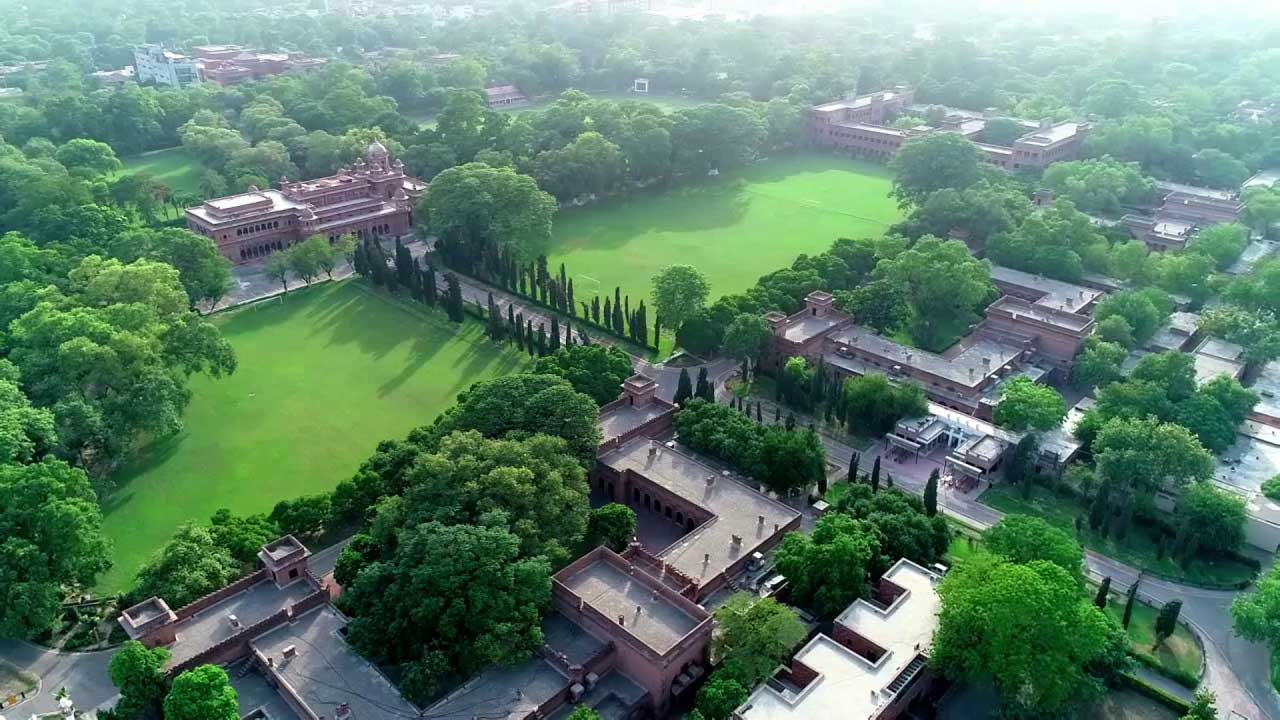
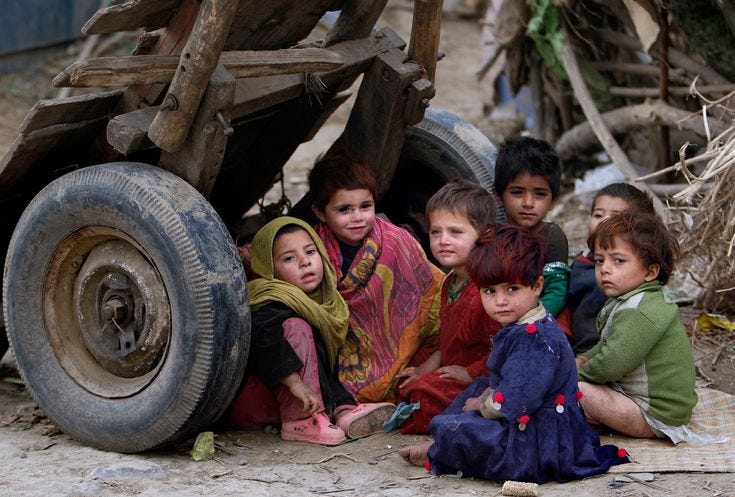
Aitchison Lahore (right), compared to a government-run school in Balochistan (left).

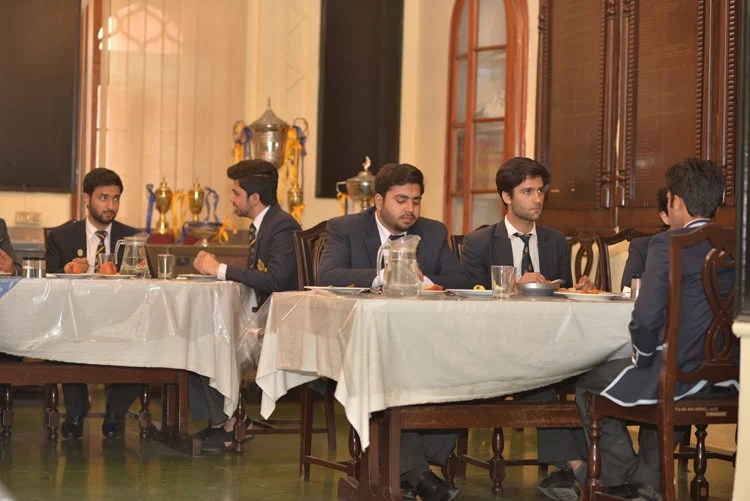
Aitchison’s motto, “Perseverance commands success”, overlooks the unfortunate reality that success for the poorest in Pakistan is predetermined at birth, regardless of their perseverance.
The opportunities and education that the students of this institution receive are something a child born in a slum in Pakistan can only dream of.
There is no reason why the poorest Pakistanis should not have the chance not only to dramatically improve their social standing but also to enhance the country’s labour capital and create real economic growth via quality education.
Although Aitchison is an extreme example and similar problems are also seen with educational institutions in Britain (like Eton, for instance), this problem is far more persistent in Pakistan, as those who attend Eton still study for the same qualifications as students at deprived colleges in the UK (i.e. A-levels). – and would to some extent still have the opportunity to apply to the same universities and access them with scholarships, bursaries and student finance.
However, most importantly, in the UK, everyone speaks the same language and is broadly part of the same culture – this is in contrast to Pakistan, where a narrow circle of English-speaking elites/upper class has access to all the opportunities that the masses do not have access to on the grounds of English proficiency.
I am not suggesting that those from low-income households in Britain have it easy – instead, I am saying that opportunities for upward social mobility in Pakistan are practically nonexistent, as the education system you study in plays a massive role in success after graduation.
Rather than dismantling this colonial legacy and elite dominance within education, politics and business after independence, Pakistan’s postcolonial elite inherited it and reproduced it. These English-medium institutions now produce future politicians, military officers and business elites. Admissions remain expensive, with monthly fees often exceeding the median monthly wage in Pakistan.
This directly supports Acemoglu and Robinson’s thesis. Nations fail when they maintain their extractive institutions rather than transforming them into more inclusive ones, and the Pakistani elite has used the same postcolonial model to protect their privilege and block the widespread access to education that could empower people experiencing poverty and raise national productive capacity by improving labour productivity.
From the perspective of political theory, this reflects what the political philosopher Frantz Fanon described as the “replication of the colonial elite” in postcolonial societies where the native ruling class replaces the coloniser without changing the institutions.
Social justice is crucial to creating an economically prosperous Pakistan. Educational institutions should provide social mobility to the least advantaged in society rather than monopolising opportunities for the elite – this would help foster competitive and efficient markets which would benefit the elite and the poor alike.
De Jure Democracy, De Facto Oligarchy.
The separation of powers is a foundational principle in many democratic nations, particularly those with a lower corruption index, such as the British and American constitutions. The former divides governmental power into three distinct branches: the legislative, executive, and judicial. This system exists to prevent tyranny and the accumulation of power in the hands of a select few, thereby promoting accountability and efficiency.
In contrast, while Pakistan nominally maintains this constitutional separation, in practice (de facto) power is concentrated outside this framework. What emerges instead is what I call a Triangle of Power – a persistent alliance among the military, political elite, and business class. This informal but deeply entrenched arrangement undermines institutional checks and balances, ensures policy-making is in its favour, and limits democratic responsiveness.
The Legislative, executive and judicial systems all are under the control of the same class – successful businessmen in Pakistan would have deep links with the military and politicians who in turn protect their interests, Legal justice is also often compromised as receiving legal justice against the political and business elite remains an uphill battle for the underprivileged – This also results in a business structure where inefficient state supported monopolies who private individuals own can get away with extracting the masses and implement rent-seeking business strategies.
Rent-seeking in economics refers to the practice of manipulating public policy or economic conditions to increase one’s wealth without creating new wealth or contributing to overall societal benefit.
Business elites can get away with using their connections to amend laws in their favour, create systemic monopolies such as Lahore’s LESCO (electricity provider) and use taxpayer money to fund their inefficient businesses in the form of subsidies.
Energy companies, for example can use this network of elite connections to charge some of the highest energy prices in the world to one of the poorest populations in the world – not only does this result in strangling the most inadequate of society by contributing to their living costs but it also significantly reduces international competitiveness of exports as energy is one of the most significant costs in the primary and secondary sector, jeopardising any prospects of developing competitive industries.
How is Pakistan supposed to transition into an industrial economy when energy costs are significantly higher than its regional competition? Energy companies are not the only ones to blame for this issue as investment in energy has been insufficient in Pakistan where projects which result in higher political and monetary gains are prioritised – for example, an infrastructure project contract would be given to the company with the most substantial ties to politicians rather than the most efficient one (and a lot of lobbying and bribes are involved in this process)
Pakistanis pay up to 40% more for energy than their counterparts in India (which also suffers from extreme inefficiency), and industrial consumers often pay more than double the electricity prices compared to China and the United States, the latter having a GDP per capita approximately 54 times higher. [7]
With this in mind, I ask the following questions:
- How can Pakistan’s industrial sector compete without lower energy costs?
- How will Pakistan achieve these lower energy costs and its broader economic objectives without dismantling the triangle of power which has created these systematic monopolies in the first place?
- How will Pakistan dismantle the triangle of power without empowering the lower class through an education system and providing opportunities to the masses?
The main point I am trying to make here is that Pakistan’s economic failure is deeply linked to its Political economy, which is deeply connected to its colonial past and exclusive institutions, as observed in its educational system and Political landscape. This issue must be addressed to foster genuine growth within Pakistan’s economy and enhance living standards for the masses.
Reference list.
- Pirzada, A., Nakhoda, A., Mohammad, S. and Javaid, S. ‘Pakistan and the rest: A tale of dismal productivity growth, misallocation, and missing transformation’, Discussion Paper 24/778, University of Bristol, 19 January 2024. Available at: https://www.bristol.ac.uk/efm/media/workingpapers/working_papers/pdffiles/dp24778.pdf
- International Labour Organisation (ILO), Labour Productivity Data Explorer (ILOSTAT). 2024/2025, Available at: https://rshiny.ilo.org/dataexplorer17/?lang=en&segment=indicator&id=GDP_2HRW_NOC_NB_A
- Global Mass Communication Review, Ali, R.I., Nawaz, M.S. and Imran, M., 2020. Impact of English language on career opportunities in the private sector of Pakistan: A case study of Jazz Digital House Multan. 7(1), pp.1–12. Available at https://www.researchgate.net/publication/360504224_Impact_of_English_Language_on_Career_Opportunities_in_the_Private_Sector_of_Pakistan_A_Case_Study_of_Jazz_Digital_House_Multan
- The Express Tribune, “Study finds: Private school graduates enjoy higher salaries,” 3 Oct 2016. Available from: https://tribune.com.pk/story/1192521/study-findings-private-school-graduates-enjoy-higher-salaries
- Shakeel, J., Attique, I. and Nadir, M., 2024. Impact of the informal economy on the efficiency and productivity of Pakistan’s agricultural sector. Lahore: Lahore University of Management Sciences (LUMS), 16 September 2024. Available from: https://mpra.ub.uni-muenchen.de/122828/1/MPRA_paper_122828.pdf
- Acemoglu, D. and Robinson, J.A., 2012. Why nations fail: the origins of power, prosperity, and poverty. London: Profile Books. https://en.wikipedia.org/wiki/Why_Nations_Fail
- Khalleq Kiani, Pakistan’s industry paying double power costs of US, China, India: report. Dawn Media Group, 6 March 2025, Available from: https://www.dawn.com/news/1896102
 The Young Economist Initiative
Leave a comment